


Nestled in a quiet residential neighborhood near the Rackstad Museum, the homestead is a peaceful oasis. As early as the turn of the 20th century, artists, carpenters, weavers, and architects gathered here—people who inspired one another and laid the foundation for the renowned Rackstad Colony.
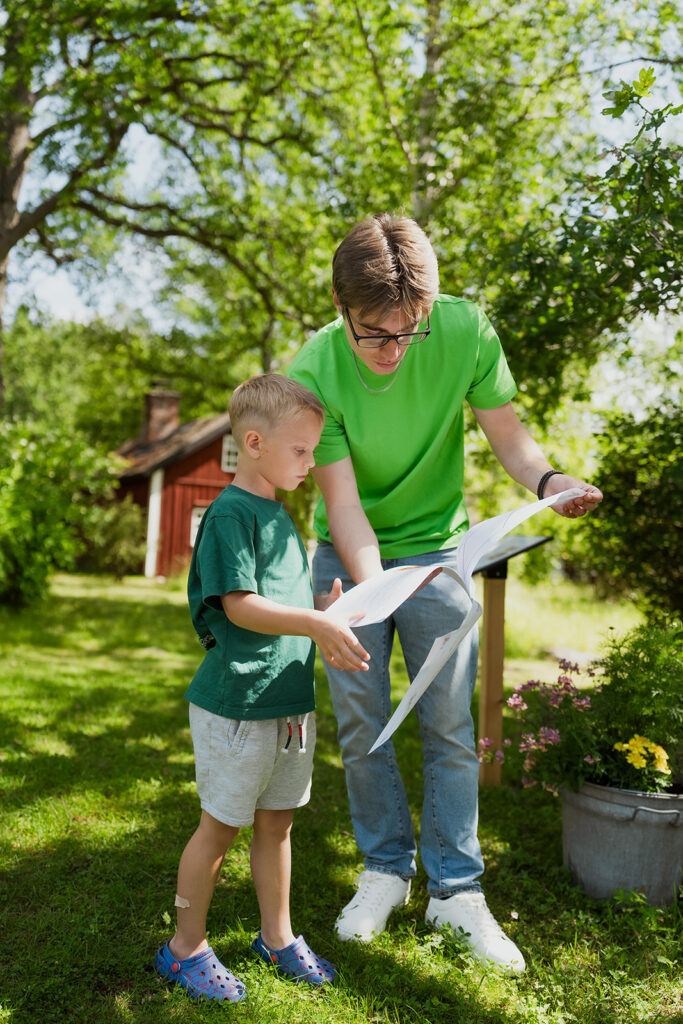
In the late 19th century, the sculptor Olof “Ola” Eriksson and his family lived at Nytomta, at the heart of the creative community that would later become the Rackstad Colony. Today, the homestead is an inspiring destination for visitors. Stroll through the historic garden, relax, and soak up the atmosphere. Explore the outbuildings and discover traditional craftsmanship. Children can draw, paint, and try hands-on activities inspired by life in the past.
Discover the Story of the Eriksson Brothers and the Rackstad Colony
The history of Nytomta is closely connected to the Eriksson Brothers’ Furniture Workshop in Haget, where the Rackstad Museum stands today. Determined to give his sons the best possible training, the cabinetmaker Erik Olsson sent Ola, Elis, Christian, and Karl on journeymen’s travels across Europe, where they learned advanced woodworking and woodcarving techniques.
When the brothers returned to Taserud, they founded the Eriksson Brothers’ Furniture Workshop. Around the turn of the 20th century, the family business had grown into one of Sweden’s leading furniture workshops. Ola worked as an ornamental woodcarver, Christian as a sculptor and designer, Karl as a master craftsman and constructor, and Elis managed sales. The workshop collaborated with many of the era’s foremost architects and became a vibrant hub for creative exchange. At its peak, it employed around 40 people and was the first furniture workshop in Sweden to accept female apprentices.
Artists began to make their way to Arvika. Christian built Oppstuhage, a house where the artist couple Gustaf and Maja Fjæstad moved in in 1898. As more artists settled in the area, the Rackstad Colony emerged—a vibrant artistic community that put Arvika on the map and became one of Sweden’s most significant artists’ colonies around the turn of the 20th century.
Nytomta was at the centre of this flourishing artistic community. It was home to the Eriksson family, and a place where people, craftsmanship, and ideas came together as part of everyday life.
Wood, Textiles and Art Nouveau – Discover Craftmanship Up Close
Ola Eriksson continued his work as a woodcarver on the homestead. In the small cottage, his workbench and carving tools are still preserved today.
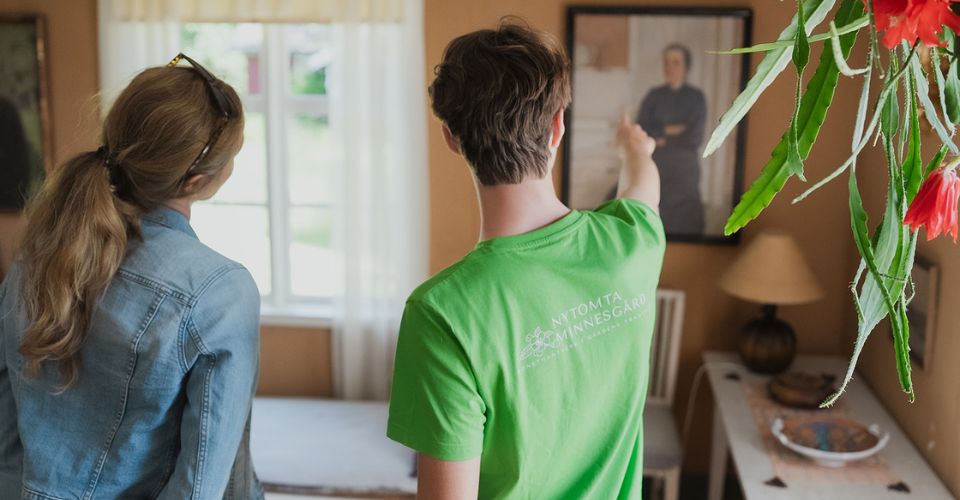
The daughter, Hanna Eriksson, a trained textile artist, created textiles that are still preserved in the house today. Together with Maja Fjæstad’s colour schemes for the walls and furniture, they form an interior that has remained almost untouched for more than a hundred years.
Since 1994, Nytomta has been home to a weaving studio with several looms and a collection of patterns created by Hanna Eriksson. During the summer, textile artists can apply for weaving residencies, making the homestead a vibrant place for artistic creation.
The Historic Garden at Nytomta
The garden has been recreated to reflect how it might have looked around 100 years ago, while continuing to evolve to ensure that all visitors—especially families with children—can enjoy the experience. Take a stroll, explore the surroundings, and soak up the peaceful atmosphere of the homestead.
The kitchen garden is one of the foundation’s cherished projects, blending naturally into the surroundings while providing a harvest of vegetables, herbs, and berries. The garden is a place for play, discovery, and inspiration throughout the year.
Opening hours for the buildings and shop
14 June–16 August 2026, Tuesday–Sunday, 11:00 am–5:00 pm.
The garden is open year-round.
Programme and Activities
Throughout the year, a variety of activities and events are organised at the farmstead.
More information on the Swedish website
Contact
Nytomta Minnesgård
Fader Eriks väg 6, Arvika
Tel +46 70-220 62 60, [email protected]
www.nytomta.se
Discover more?
Learn more about Nytomta´s history, past and present, on the Nytomtas website and through the foundation´s social media channels.
Photos: Jeanette Dahlström