




The city sits where the Klarälven river flows into Lake Vänern, Sweden’s largest lake. From here the Vänerleden cycle route runs in three directions along the lake, east, south and west, while the car-free Klarälvsbanan follows the Klarälven north. That makes three day trips in three directions, and each one brings you back to Karlstad in time for dinner.
This suits anyone who wants an active holiday without setting out to ride far. The distances are manageable, the roads safe, and the pace is up to you. You won’t need a racing bike – a simple step-through bike or an e-bike works just fine.
– It’s not the cycling itself that’s the point but experiencing the place. You get culture and history along the way, and you’re out in nature the whole time,
says Elin Värmsjö, who works with cycling at Visit Värmland.

Karlstad as your base
Stadshotellet sits centrally by the river. The restaurants gather in the Inner Harbour (Inre hamn) around the marina, and along Mariebergsviken, the bay where Lake Vänern reaches in. The area is also home to the Löfbergs coffee roastery and its café. For a longer dinner, there’s the Italian restaurant Fratelli, at Soltorget in central Karlstad.
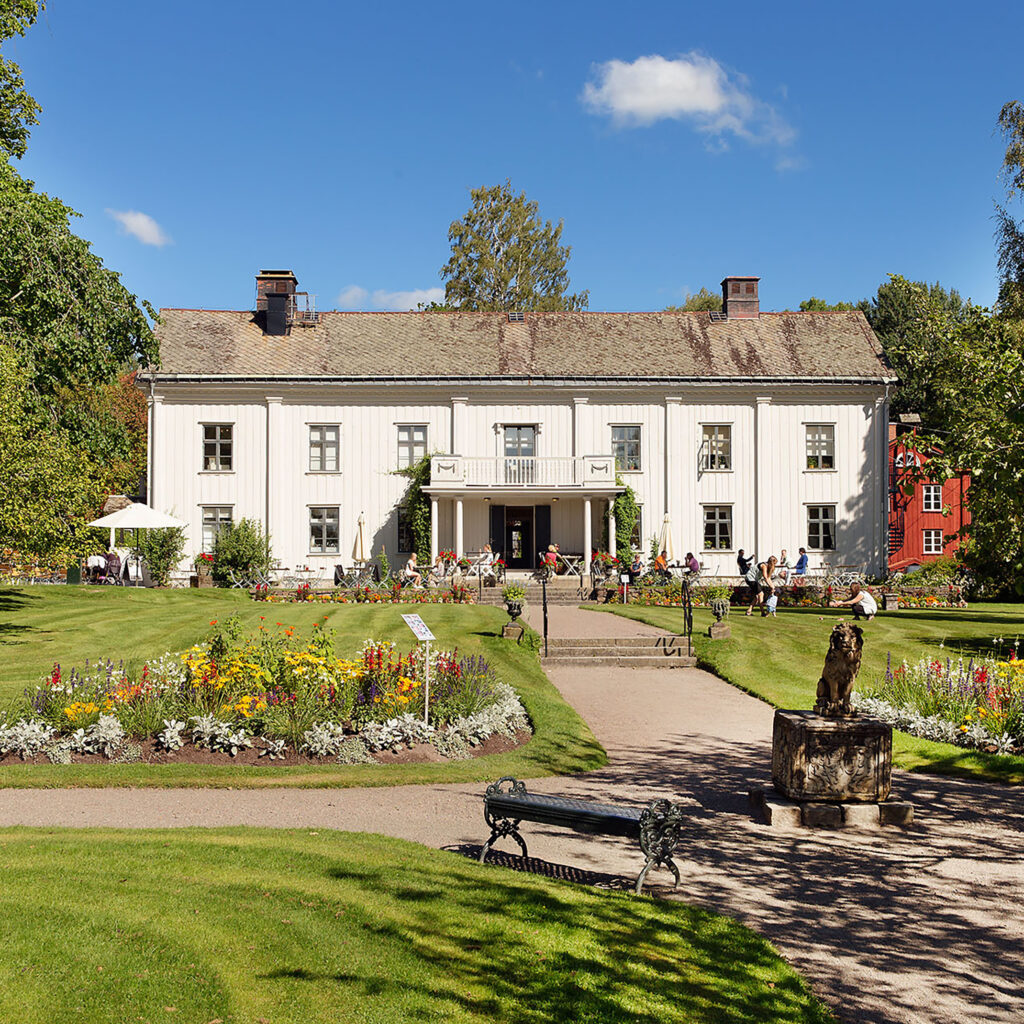
Between rides, there’s culture within walking distance. Sandgrund shows Lars Lerin’s watercolours, and in the building next door is Värmland Museum, one of Sweden’s most visited regional museums. Wermland Opera stages performances in season. A little way out of town lies Alster Manor, the memorial home of the poet Gustaf Fröding, and by Lake Vänern the Skutberget recreation area, with bathing.
Travel light and take the bus out
Most people arrive in Karlstad by train or bus, without a bike of their own. The easiest thing then is to rent one locally. The town has several rental shops, among them Velostore, Bulten Bike and Solsta Cykel, with both ordinary bikes and e-bikes.
Worth knowing is that you can bring your bike on Värmlandstrafik’s buses in summer. With a booked bike space, you can ride out a stretch in the morning and cycle back towards Karlstad, instead of covering the same route in two directions. A combination of bus and bicycle lets you get further afield and still be home by evening.
– You see your surroundings differently from the saddle, and there’s something about having a goal for the day,
says Elin Värmsjö.
East towards Kristinehamn
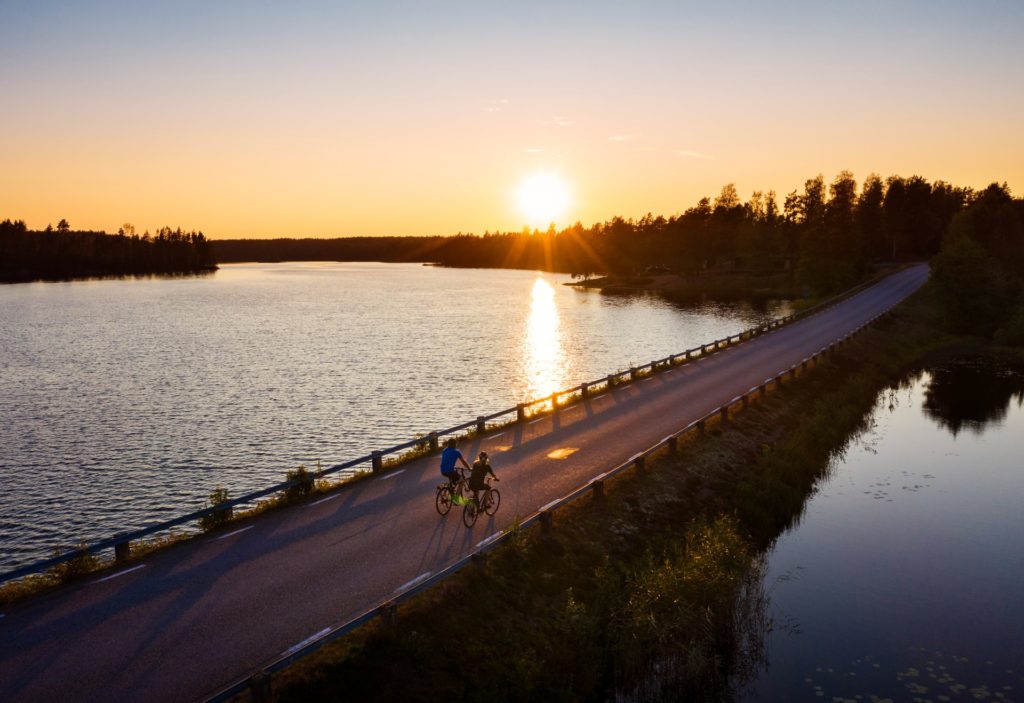
The first trip follows the Vänerleden east. From the main square (Stora torget) the route passes Sandgrund and Värmland Museum and continues along the Klarälven out of town, past Kroppkärrssjön, which has a small beach and swimming spot. Further east the farmland takes over, and just before the village of Väse, Lake Vänern comes into view again. In Väse there’s Old School Gifts & Gallery, and beyond the Ölme plain lies Kristinehamn, with its 17th-century streets.
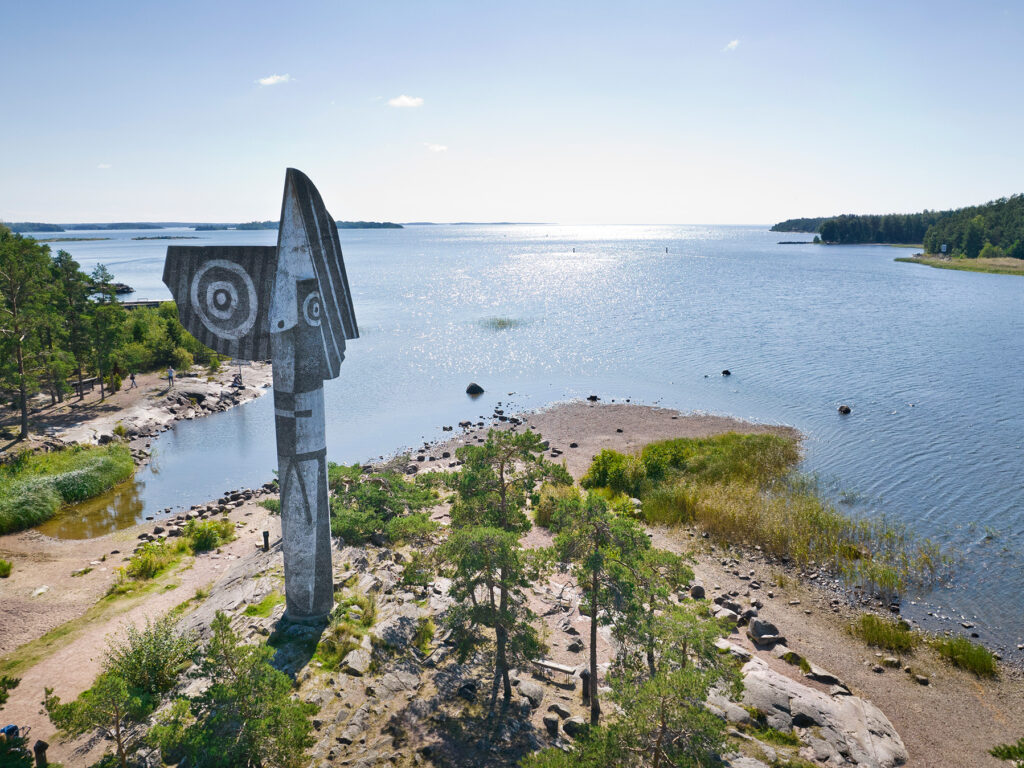
In Kristinehamn, just under six kilometers of cycle path along the water lead out to the archipelago. There stands Pablo Picasso’s sculpture Jacqueline, fifteen meters tall and one of his largest works. Around it are swimming spots, rocks and shuttle boats out to the islands. For food there’s Oliveriet, for ice cream Picassos Veranda, and on the way home lies Ölme Prästgård.
You can use the bus one way, route 500, so the trip only needs to be cycled in one direction.
Out to Hammarö
The second trip is a loop south, close to the water the whole way. The route crosses the Klarälven on a cycle bridge and continues out onto the island of Hammarö, past the Marieberg water meadows with their birdwatching towers and down towards Skoghall.
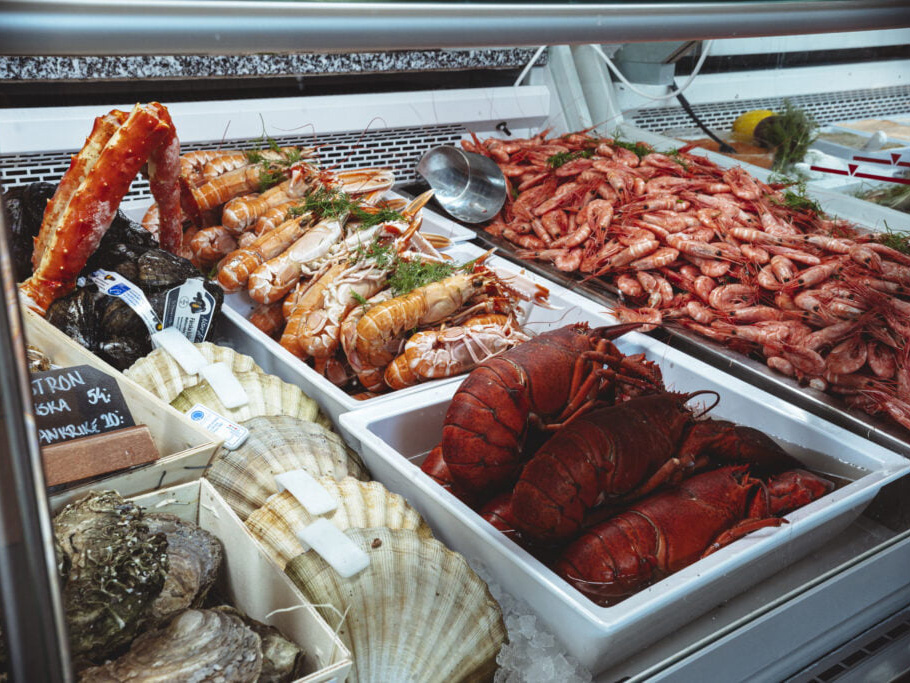
On to Lillängshamnen, where the fish smokehouse sells freshly smoked fish and looks out over Lake Vänern. There are several places to bathe along the way, including the shallow, gently shelving beach at Getingberget and First Camp Mörudden. The loop passes Hammarö Church, the Archipelago Museum (Skärgårdsmuseet) and Hammars udde before turning back towards the Inner Harbour.
North along the Klarälven to Deje
The third trip follows the Klarälvsbanan, a disused railway embankment that is now an asphalt cycle path, car-free the whole way and largely flat. From Kroppkärrssjön it’s a little over thirty kilometres to Deje, through farming country and small church villages with the Klarälven alongside.
In Deje, by the rapids, stands the Old Power Station (Gamla Kraftstationen), an early-1900s power station turned art gallery, with eleven-metre ceilings and much of the old interior still in place. It houses Culinarum Café, listed in the White Guide, and just outside Deje lies Dömle Herrgård, where lunch needs to be booked ahead. The trail continues north towards Ransäter, Munkfors and Laxholmen, with their art exhibitions, and on to Hagfors for anyone who wants to ride further.
Here too you can take your bike on the bus, route 600, in summer.Även här går det att ta cykeln på bussen, linje 600, under sommaren.
More on two wheels
There are more national cycle routes to explore around Karlstad.